
Ironically, Talbott, currently the president of the leading US think-tank Brookings Institution, has been critical of the nuclear deal, as India is yet to sign the Comprehensive Test Ban Treaty.
The Congress-led United Progressive Alliance government at the Centre will have to face the electorate before operationalising the proposed civilian nuclear deal, Communist Party of India Marxist General Secretary Prakash Karat claimed on Tuesday.''They will have to face the people's court before implementing the proposed deal as getting clearance from various agencies was a time consuming effort," he said during a seminar.
'The 123 Agreement is open to different interpretations, but it has enough ambiguities there to operate in our interest. The withdrawal clauses in the Agreement are a masterpiece in drafting.'
The United States has said that India is committed to the Nuclear Liabilities Bill and it was up to the United Progressive Alliance government to figure out how to move forward in the wake of the Opposition's objections to some aspects of the controversial legislation.The stalled bill, whose passage in Parliament is a must, is a crucial step for the full implementation of the historic Indo-US civil nuclear deal.
The Left parties seek a statement from the government reflecting the 'sense of the House' on the vital issue.
The US said on Wednesday that the Indian Parliament needed to act upon the "critical" nuclear liability bill to take forward the Indo-American nuclear deal, which had reached "almost the finishing line".
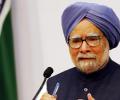
'All the big things happening today in economic development have their beginning in Dr Manmohan Singh's ideas.'

The mortal remains of former prime minister Dr Manmohan Singh were consigned to flames at the Nigambodh Ghat in New Delhi on Saturday amid the chanting of religious hymns. The funeral pyre was lit by his eldest daughter Upinder Singh.
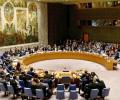
Pakistan was waiting for an opportunity to bring the Jammu and Kashmir issue to the global agenda and resorted to the terrorism route to provoke India, observes Ambassador T P Sreenivasan.
A key aide to United States President Barack Obama has dismissed reports that the new US administration has kept the nuclear deal with India on the backburner. Bruce Riedel, a former Central Intelligence Agency official who co-chaired an inter-agency committee which formulated Obama's Af-Pak policy, also did not see Robert Einhorn's recent appointment, as Secretary of State Hillary Clinton's special adviser on non-proliferation issues, as an impediment.
K Subrahamnayam, strategic thinker and staunch supporter of the deal debates the issue with rediff.com Managing Editor Sheela Bhatt.
"The Congress should realise that secularism alone is not enough and it should do some serious introspection over its policies," said CPI secretary D Raja.
Samajwadi Party, which has 39 members in Lok Sabha, is gradually becoming a foe-turned-friend for Congress, which seeks to extend the lifeline of the coalition government headed by it if the Left pulls the plug.
The US ambassador said "every effort" is being made to conclude the deal before President George W Bush arrives here.
Pakistan has failed to secure a clear commitment for its much sought-after civil nuclear deal from the United States, which has decided to help in upgrading three of its thermal power plants.
He disclosed how his government had briefed many of the political parties, including the main opposition Bhartiya Janata Party, represented in Parliament on the details of the agreement.
Several NSG countries like Britain, France and Russia besides the US have expressed their approval of the deal but some of its members, particularly the Scandinavian nations, have reservations.

'Pakistan's only concern has been while they were on the FATF watch list was to distance their State institutions and organs from any direct connection with the actual execution of militancy inside Kashmir.'
The United States has said that it has broadened the non-proliferation regime by bringing India inside it through the Indo-US nuclear deal.

'We should not just react when a terror attack happens on our soil.' 'Our approach should be continuous and a launch pad should be destroyed the moment it comes up.'

Srinagar-born expert was consulted by the Bush administration when the US and India began negotiating the civil nuclear deal. Aziz Haniffa reports
The Sino-Pakistan nuclear pact highlights the growing assertiveness of China in global politics and its willingness to take on Washington. It also showcases China's penchant for viewing Pakistan as an important asset in countering India, writes Harsh V Pant.
India is being sold a bill of goods. Yet again.
India and the United States will hold discussions on a bilateral agreement for the implementation of the nuclear deal on Monday.

'And if the United States, at that time, perceives India to have welched on the deal, not been our friend, when we did so much to make it a friend, that's trouble.'
However, she said that during her discussions with Indian leadership in New Delhi starting on Sunday she would explore how India could help the US to ensure that nuclear material and knowledge is kept out of rogue states and non-state actors.
Former Indian Ambassador to the United States Ronen Sen has asserted that any denial of a level playing field to United States industry and business -- that lobbied feverishly for the US-India civilian nuclear deal -- in the wake of the Nuclear Liability Bill passed by the Indian parliament would be 'worse than a breach of faith'.
"The Democrats will continue efforts to operationalise the Indo-US nuclear deal after coming to power and will work together for the cause of much warranted global disarmament," he said.
Now that the United Progressive Alliance coalition has nine months in office, it must be transparent and accountable to those who pay and elect it to serve the people of India. A single mis-step on the 123 could irreparably damage rather than advance India's national interest

'The touchstone is reciprocity which will be applied to friends and foes alike.' 'It will be a bitter pill to swallow.'
Even as Parliament is rocked by protests over the Indo-US nuclear deal, Lok Sabha Speaker Somnath Chatterjee on Friday scheduled the discussion on the deal for Monday.
Canada and India are negotiating a comprehensive nuclear deal that will allow the country to develop civilian nuclear power plants, a spokesperson of the Canadian foreign office said.
The main opposition Bharatiya Janata Party has already rejected the deal and sought a joint parliamentary committee to go into it after which parliamentary approval is necessary to operationalise the deal.
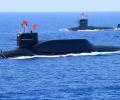
China has delivered a second advanced submarine to Pakistan, part of a larger deal to bolster the South Asian nation's naval capabilities in the Indian Ocean. The move underscores China's growing influence in the region and its strategic partnership with Pakistan.
The Bharatiya Janata Party on Friday dubbed as somersault Prime Minister Manmohan Singh's "not the end of life" talk on the India-United States nuclear deal, alleging that the Congress has developed cold feet over the prospect of mid-term polls.
